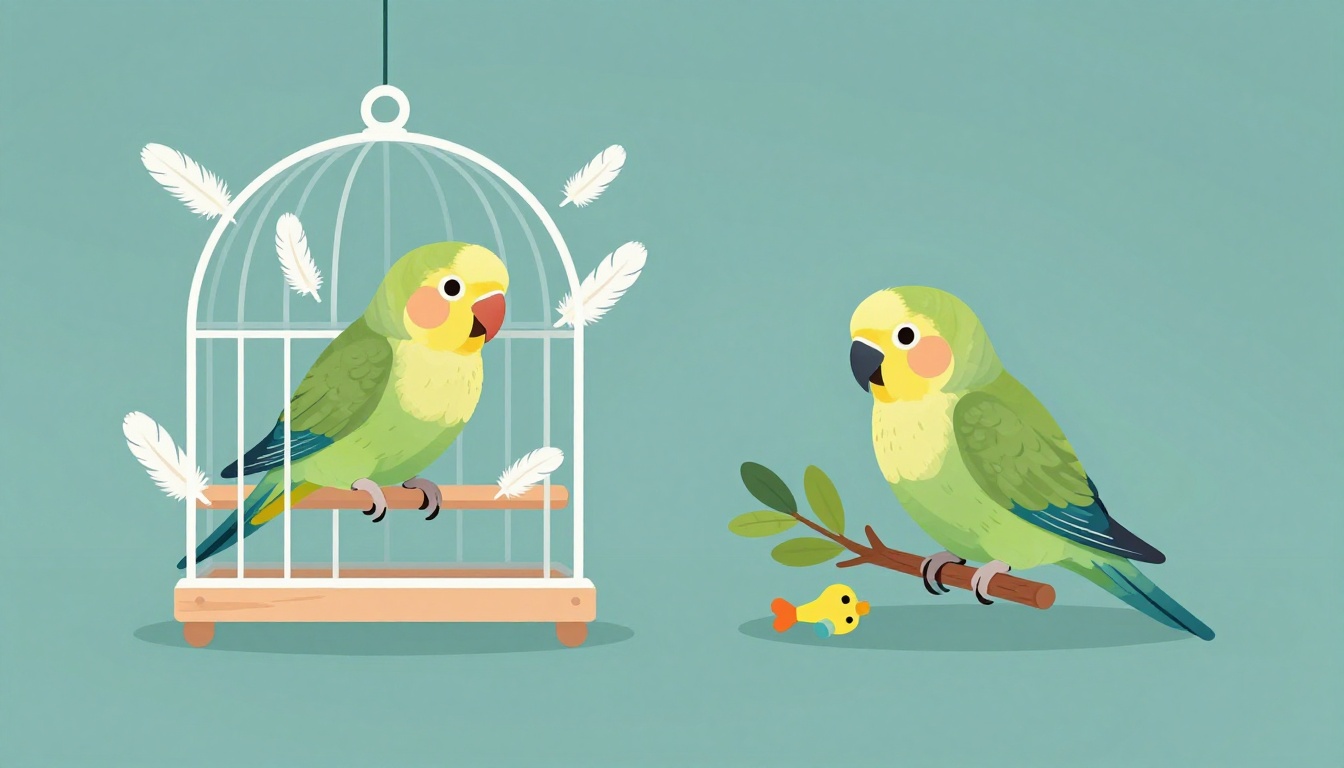
Picture this. You walk into the room, and your parrot lets out a piercing scream. Feathers scatter on the cage floor. Or maybe it just sits there, quiet and hunched. These moments worry every parrot owner.
Parrots rank high in smarts, much like a three-year-old child. They crave play, talk, and change. Boredom hits when life stays dull. Stress strikes from sudden shifts in their space. Ignore these signs of a bored or stressed parrot, and problems grow. Feather loss leads to infections. Screaming turns chronic.
This guide breaks it down. First, we cover causes. Then, spot boredom clues. Next, stress signals. Learn to tell them apart. Finally, take action steps. You will catch issues early. Your bird stays happy and healthy.
Common Reasons Your Parrot Feels Bored or Stressed
Parrots face boredom from simple lacks. Small cages limit movement. Few toys mean no challenge. The same routine day after day bores them fast. They need fresh items to shred or swing on.
Stress builds from outside threats. Loud vacuums startle them. New dogs or babies invade their territory. Vet trips spike fear. Even illness or bad food adds strain. Parrots sleep 10 to 12 hours nightly. Disrupt that, and tension rises.
Environment changes matter most. A move to a new house shakes routines. Dim lights or drafts unsettle them. Poor diet lacks nutrients for calm moods. Watch for these triggers daily.
Owners often miss subtle shifts. For example, place the cage near a window. Sunlight warms, but traffic noise stresses. Parrot care basics from Lafeber Pets explain more on daily needs.
In short, roots lie in habitat and habits. Spot them early to prevent signs.

Spot These Telltale Signs of Parrot Boredom
Boredom shows as low-key frustration. Your parrot lacks spark. It seeks ways to fill empty time. Watch close because habits form quick.
Screaming More Than Usual
Bored parrots scream for you. They want play or talk. Happy chatter sounds soft and rhythmic. Bored yells drag on, often at odd hours. Record calls on your phone. Patterns reveal the cause. Does it quiet with a new toy? That’s boredom.
Pacing and Repetitive Behaviors
Smart birds like African Greys pace perches. They walk back and forth. Or shake cage bars. These stereotypies vent pent-up energy. In the wild, they forage miles. Captive life limits that. So, they repeat moves.
Losing Interest in Play and Toys
Toys gather dust. Your parrot ignores swings or bells. Normal birds shred paper daily. Bored ones turn away. Some regurgitate food on toys, a sad plea for fun. Offer a puzzle feeder. No interest means check deeper.
Mild Feather Picking or Chewing
Early boredom leads to feather nibbles. They chew ends, not yank roots. Stress ramps it up later. Check skin for mites first. Clean beaks show habit over illness.
Readers ask, does your parrot jog in place on its perch? These clues scream under-stimulation. Act now. Habits stick otherwise. For more on vocalizations in parrots, see vet resources.
Recognize These Stress Signals in Your Parrot Right Away
Stress flips your parrot to high alert. Body tenses against danger. Energy spikes, unlike boredom’s slump. Spot it fast to avoid fights or sickness.
Aggression and Biting Outbursts
Fear bites hard. No playful nip. Lunges at hands near the cage. Triggers include fast moves or strangers. Back off slow. Let it calm.
Fluffed Up and Crouched Posture
Feathers puff out. Body hunches low. Tail fans wide. Hissing joins in. This defends space. Illness mimics it, so note duration.
Fast Breathing or Panting
Chest heaves quick. Beak opens wide. Overheat or panic causes this. Move to shade. Offer water. Watch if it lasts.
Eye Pinning and Raised Wings
Pupils flash narrow-wide. Wings lift slightly. Excitement mixes with stress. Pair it with growls for true alarm.
Vivid stories help. One owner shared how a new cat caused crouching for days. Early notice prevents harm. Stress in birds from PetMD details overlaps with health.

Boredom or Stress? How to Tell Them Apart and Act Fast
Boredom drags slow. Repetitive acts fill time. Energy stays low. Stress reacts sharp. High energy fights threats.
Overlaps confuse, like screams. Bored ones beg. Stressed ones shrill in panic. Rule out illness first. Weight drops or bloody droppings mean vet now.
Use this checklist to sort it:
| Sign | Boredom Clue | Stress Signal |
|---|---|---|
| Screaming | Prolonged, attention-seeking | Sharp, fearful bursts |
| Feather Issues | Mild chewing | Heavy plucking, bald spots |
| Activity | Pacing, low energy | Crouching, aggression |
| Breathing | Normal | Rapid panting |
| Eyes/Wings | Steady | Pinning, raised |
This table clarifies quick. Boredom needs fun. Stress demands calm and checkups. Hesitate, and issues worsen.
Simple Steps to Relieve Your Parrot’s Boredom or Stress
Start with enrichment. Rotate toys weekly. Add foraging boxes with nuts. Out-of-cage time builds bonds.
Boost Enrichment and Play Daily
Puzzle feeders hide seeds. Training tricks like wave keep minds sharp. Skip mirrors; they frustrate. Swings and ladders vary heights.
Create a Calmer Environment
Stick to routines. Cover cages at night. White noise drowns horns. Introduce changes slow, like new people at distance.
When to Call the Vet or Expert
Red flags scream help. Weight loss, dark stools, or nonstop picking. Find avian vets via directories. Behaviorists tweak plans.
One owner swapped toys daily. Screams stopped in a week. Your turn. Try these today.

Spot signs of a bored or stressed parrot early. Boredom fades with play. Stress eases in peace. Check your bird now.
Make changes this week. Watch behavior shift. Happy parrots chatter sweet songs.
Share your parrot’s quirky signs in comments. Pin this for quick reference. Your feathered friend thanks you.