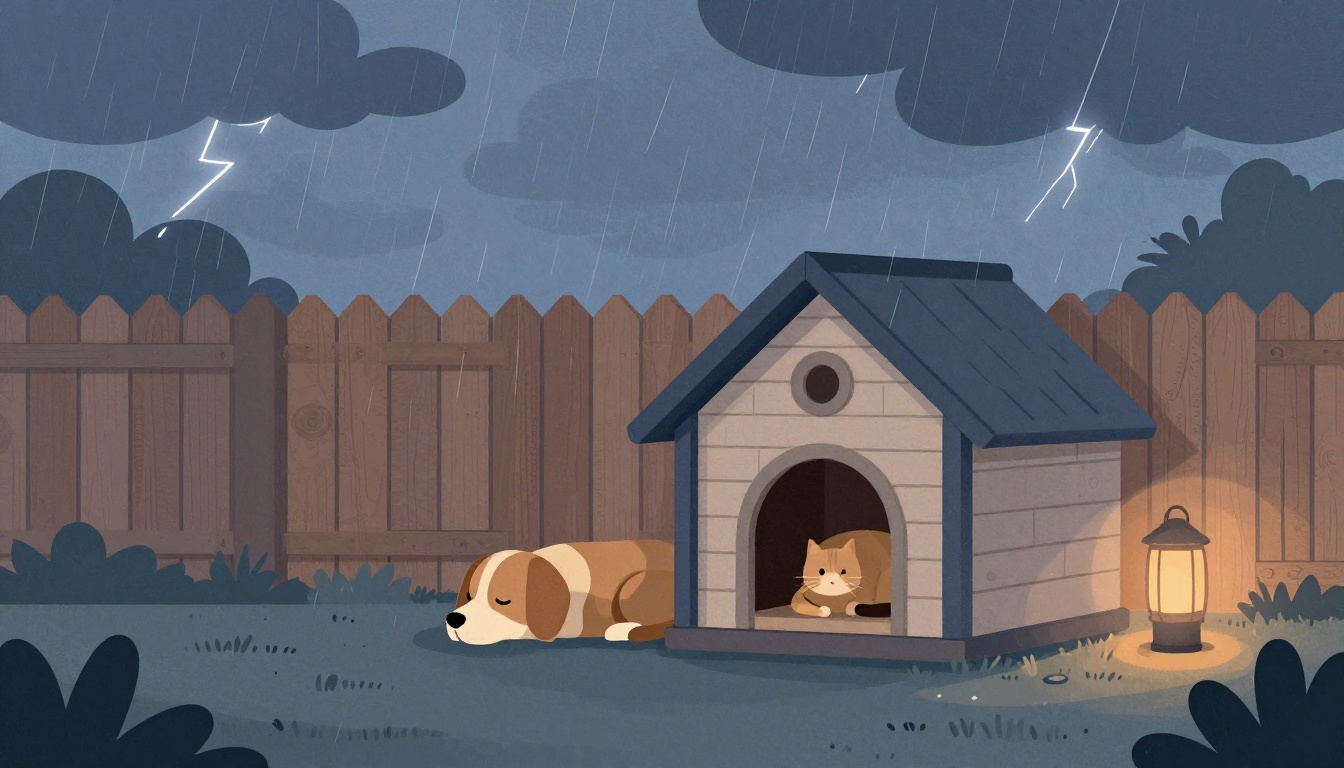
Picture this. Your loyal dog Max cowers in the backyard as the first rumble echoes overhead. Rain starts to pour. He shakes and pulls at his chain. Thunderstorms terrify many outdoor pets like dogs and cats. These storms bring lightning strikes, deafening noise, and flash floods. Outdoor animals face bigger risks because they lack quick shelter.
You might worry about your kenneled pup or roaming cat. Panic can make them bolt through fences or hide in dangerous spots. Lightning adds deadly threat. Heavy winds topple doghouses. Beginners often overlook these dangers until it’s too late. This guide covers the real risks, early warning signs, prep steps, storm-time actions, and recovery care. You’ll learn simple ways to protect your pets. Keeping outdoor pets safe during a thunderstorm boils down to planning ahead. These steps work for most backyards and common breeds. Stay calm, act fast, and your furry friends will ride out the storm.
Why Thunderstorms Put Outdoor Pets in Real Danger
Outdoor pets suffer more in storms than indoor ones. They stay exposed in yards or kennels. Dogs in open runs or cats under porches face lightning, noise trauma, and flying debris. About 30% of dogs show storm phobia, according to vets. These fears trigger escapes or injuries. Act now because storms hit fast in spring and summer.
Kennel dogs pant heavily from thunder. Free-roaming cats dart into traffic. Heavy rain chills them to the bone. Winds rip shelters apart. Hail pelts exposed skin. Pets can’t call for help. They rely on you.
Lightning: The Invisible Killer
Lightning kills pets in open fields. It strikes tall objects first. A dog near a tree or fence becomes a target. Ground current spreads the shock underground. Metal bowls or chains conduct electricity too.
For example, a chained dog touches wet ground during a strike. Current zaps through paws. Pets in low spots fare better. Stay away from fences and trees. Check NOAA’s lightning safety tips for pets for more facts. This threat kills silently, so prevention matters most.

Thunder Panic and Bolting Behavior
Thunder booms shake pets to their core. Loud noise sparks a flight response. Dogs jump six-foot fences. Cats squeeze through tiny gaps. Herding breeds like Border Collies react strongest because of sensitive hearing.
They run until exhausted, then hide in storm drains or roads. One rumble leads to lost pets. Understand this instinct. It helps you block escapes early. Vets note noise phobia worsens with age. Training cuts risks.
Flooding, Wind, and Hail Hazards
Flash floods trap pets in low yards. Water rises fast, drowning kenneled dogs. Winds over 50 mph snap branches onto shelters. Hailstones bruise ribs and heads.
Doghouses flip in gusts. Outdoor cats seek flimsy sheds. Real cases show wrecked enclosures after storms. Secure setups prevent most harm. Focus on your yard’s weak spots.
Spotting a Thunderstorm Before It Surprises You
Storms brew 30 to 60 minutes out. Spot signs early to grab your pet. Dark skies warn first. Pets sense changes before you do. Watch for these cues daily, especially in humid weather.
Clouds pile high. Winds pick up. Distant rumbles grow louder. Your dog whines or paces. Cats hide under beds. These signals give time to act. Early spotting saves lives.
Watch the Sky and Feel the Air
Greenish skies signal trouble. Anvil-shaped clouds roll in. Air turns heavy and humid. Barometers drop fast. Pets twitch ears or act restless first.
For instance, your pup stares at the horizon. Thunder follows soon. Feel sudden gusts. They push leaves sideways. These free cues beat waiting for rain.
Use Tech and Pet Cues for Extra Warning
Apps send push alerts. Try Weather Underground radar. Local weather radios beep for severe storms. Pets provide instincts too. Dogs dig or drool before booms.
Here’s a quick guide:
| Sign | Time Before Storm |
|---|---|
| Dark cumulonimbus clouds | 45-60 minutes |
| Pet pacing or whining | 30-45 minutes |
| Distant thunder | 15-30 minutes |
| Wind gusts and humidity rise | 10-20 minutes |
Use this table to prioritize. Tech plus pet behavior works best.
Build a Safety Plan Before the Storm Hits
Prep your yard now. Strong fences and shelters protect pets. Update IDs and train recalls. Stock calming tools. Indoor spots beat outdoors always. Follow these steps for beginners.
- Inspect fences for gaps. Bury chicken wire at bases.
- Build elevated doghouses with straw bedding.
- Add microchips and lit ID tags.
- Practice “come” commands daily with treats.
- Buy pheromone sprays or anxiety wraps.
Spring storms demand yearly checks. These habits keep pets secure.

Strengthen Shelters and Secure the Yard
Raise doghouses off wet ground. Use waterproof roofs and vents. Fill with straw, not blankets. It insulates better. Anchor with stakes.
Clear loose items like toys or pots. Winds hurl them like missiles. Trim trees near kennels. Solid fences stop bolters.
Train and Equip Your Pet for Quick Safety
Teach recall in good weather. Use high-value treats. Reward fast comes. Fit ThunderShirts for anxiety if needed.
Leashes and collars stay handy. Glow-in-dark tags shine at night. These tools speed indoor moves.
Handle the Storm Peak Like a Pro
Storms peak with fury. Bring pets inside to a quiet room if you can. Cover crates with blankets. Play white noise. Outdoor stays mean locked shelters.
Monitor with yard cameras. Comfort gently. Avoid yelling at fear. It worsens stress. Stay safe yourself first.
Bring Inside or Lock Down the Shelter
Prioritize indoors. Basements muffle noise best. Pad floors with towels. For outdoor pets, latch doors tight. Cover openings with tarps against wind.
Double-check chains. Never leave them exposed.
Calm Your Pet Without Adding Stress
Pet softly if they seek you. Play soft music. Classical tunes soothe nerves. Distract with chew toys. Skip over-hugs; they amp fear.
Vets prescribe meds for bad cases. Consult first. Patience builds trust.
Post-Storm Checkup to Ensure Full Recovery
Storms pass, but check pets right away. Look for cuts from debris. Feel for hail bruises. Dry wet fur to fight chills.
Warm them slowly with blankets. Watch for limps or shakes. Lethargy signals shock. Vet trips fix infections early.
Rebuild damaged fences. Praise calm behavior. Desensitization tapes help long-term. Strong bonds speed recovery.

Thunderstorms threaten outdoor pets with lightning, panic, and floods. Spot signs early through sky watches and apps. Prep sturdy shelters and train recalls. Act during peaks by going indoors or locking down. Check after for injuries.
Make your storm plan today. It takes one afternoon. Share your pet’s storm stories in the comments. Subscribe for more safety tips. Pin this for next season. Your outdoor pals deserve peace. With these steps, they’ll stay safe and sound.