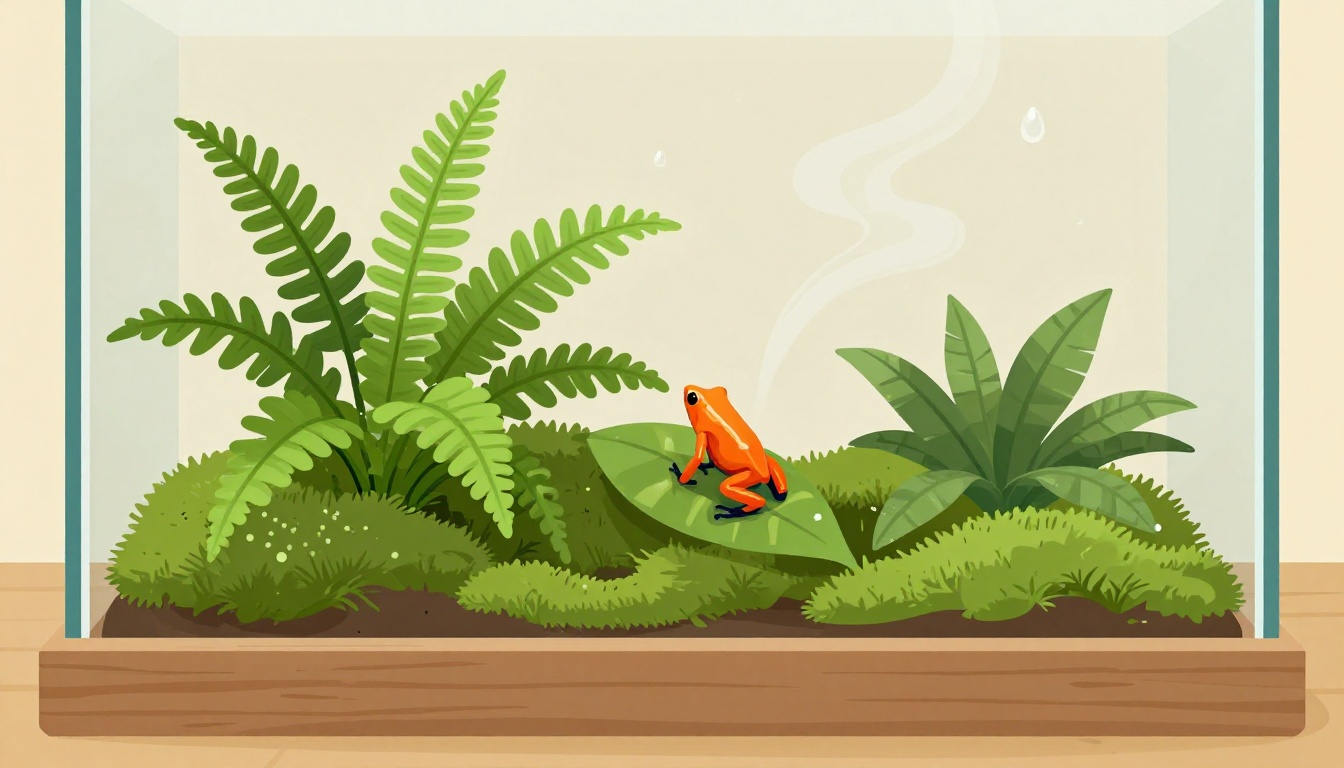
Picture this: your tropical terrarium bursts with vibrant ferns, glossy philodendrons, and dart frogs hopping between leaves. Everything thrives in a misty paradise. Now imagine the opposite. Leaves wilt, moss turns crisp, and your isopods burrow deep to escape the dryness. That shift happened because humidity dipped below 70%.
You set up a tropical terrarium to mimic steamy rainforests. Plants need it to stay plump and grow fast. Critters like frogs rely on it for skin hydration and easy sheds. Too low, and stress sets in. Too high, and mold takes over. Aim for 70-90% humidity most days. This range keeps everyone healthy.
In this post, you’ll learn why humidity matters so much. You’ll find the right targets for your setup, tools to track it, easy ways to boost and hold it, and fixes for problems. Follow these steps, and your terrarium stays lush year-round. Let’s start with why it controls success or failure.
Why Humidity Makes or Breaks Your Tropical Terrarium
Humidity recreates the damp air of rainforests. Plants there transpire water through leaves. They pull moisture from soil and release it as vapor. Your terrarium needs that cycle to work. Without enough humidity, leaves dry out fast. Growth slows. Edges brown and curl.
Consider calathea plants. They love 80-90% levels. Low humidity makes their patterns fade. Dart frogs suffer too. Dry air cracks their skin. Shedding fails. They hide and stop eating. On the flip side, high humidity helps bioactive setups. It feeds beneficial microbes. These fight bad mold and pests.
Too little humidity stresses everything. Animals pant or soak constantly. Plants drop leaves. Bioactive soil dries, killing springtails. Too much causes rot. Roots drown. Fungi spread. Think of it like a sponge. Squeeze too hard, no water left. Soak too long, it molds.
Real setups show this. One keeper lost anthuriums to 50% drops in winter. Another saved frogs by adding mist. Balance keeps your slice of jungle alive. Next, match levels to your inhabitants.

Target the Right Humidity Range for Your Specific Setup
Pick your range based on species. High-humidity lovers need 80-90%. Moderate ones do fine at 70-80%. Test empty first. Run it a week. Adjust before adding life.
Factors matter too. Your room’s dry heat cuts levels. Small tanks lose moisture quick. Seasons shift needs. Summer might hold steady. Winter demands more work.
Here’s a quick guide to common picks:
| Species | Ideal Humidity | Notes |
|---|---|---|
| Poison dart frogs | 80-95% | Mist often for skin health |
| Crested geckos | 70-80% | Lower at night okay |
| Anthuriums | 80-90% | Prevent leaf curl |
| Isopods | 75-85% | Keep substrate damp |
| Ferns | 85-95% | High for spore growth |
This table helps beginners choose. Match close, or issues arise.
Matching Humidity to Your Tropical Plants and Animals
Pair wisely. Ferns crave 85%+. Moss hits 90%. Tree frogs want 80-95%. Mismatches hurt. Dry ferns brown. Wet moss rots if vents lack.
Start simple. Combine philodendrons (75-85%) with isopods. Add moss for ground cover. Avoid extremes together. Test combos in small jars first.
Adjusting for Terrarium Size and Location
Small enclosures evaporate fast. Add frequent mists. Large ones trap air better. Dry apartments fight central heat. Basements hold damp easier.
In April 2026, smart controllers trend for apartments. They link to apps. Check your space. Seal drafts. Boost as needed.
Must-Have Tools to Monitor Humidity Like a Pro
Grab a digital hygrometer. Inkbird models cost under $15. They read accurate to 1%. Place one near substrate. Add another at canopy level. Avoid direct lights. Heat skews numbers.
Combo units track temp too. Zoo Med ReptiFogger pairs well. Calibrate monthly. Dunk in salt water. Compare to 75% standard.
Apps log data. Snap readings daily. Spot trends early.
Automation shines. Humidistats cut misters at peaks. Saves time and water.
Pros and cons:
| Tool Type | Pros | Cons |
|---|---|---|
| Digital Hygrometer | Cheap, precise, easy read | Needs batteries |
| Thermo-Hygrometer | Tracks both metrics | Bulkier for small tanks |
| Humidistat | Auto control | Setup takes effort |
For 2026 picks, see Zoo Med’s latest hygrometer reviews. These tools prevent guesswork.

Simple Strategies to Create and Hold Steady High Humidity
Start with substrate. Coco fiber holds water well. Mix with sphagnum moss. Layer over drainage. It releases slow.
Mist 2-3 times daily. Hand sprayers work for starters. Pumps save arms. Foggers fill fast. Use ultrasonic ones. Clean weekly to avoid minerals.
Add features. Drip walls recycle water. Small waterfalls boost evaporation. Seal gaps with silicone. Glass lids trap most vapor.
Plants help too. Dense groups create microclimates. Balance vents. One inch gaps prevent stale air.
Costs stay low. Basic mist kit runs $20. Full auto setup hits $100.
Build Humidity from the Ground Up with Smart Substrates
ABG mix suits frogs. Tree fern fiber drains yet holds. Prep by soaking overnight. Squeeze to damp, not wet. Top with live moss. Refresh monthly.
Layer like this: gravel base, then hydroleca, top with soil. Moisture wicks up steady.
Misting, Fogging, and Water Features That Work
Schedule mists morning, noon, evening. Auto timers run 2 minutes each. DIY drippers use bottles. Poke holes. Hang high.
Keep electrics dry. Use grounded outlets. Test flow to avoid floods.
Using Plants and Layout to Naturally Boost Humidity
Pack epiphytes on branches. Pothos trails add cover. Canopy shades and traps vapor. Group wet lovers center. Vents on sides.
Spot and Solve Common Humidity Headaches Fast
Drops signal leaks or fans. Substrate cracks dry. Animals stress. Spikes show poor flow. Walls drip constant. Mold spots grow.
Check weekly. Wipe condensation. Log readings. Tweak seasons. Dry winters need extra fog.
For more on bioactive troubleshooting, check ReptiFiles tropical care guide.
Quick Fixes for Dropping Humidity Levels
Hunt leaks. Feel for air escapes. Mist heavy. Pack more moss. Test seal: fog and watch drops.
Add humidifier outside if room dries.
Taming Excess Humidity Without Losing the Tropics
Open vents wider. Add low fan on timer. Spot clean mold with vinegar. Dehumidifiers help basements.
Balance keeps it tropical, not swampy.

Maintaining proper humidity levels boils down to monitoring close, targeting smart ranges, using solid methods, and fixing fast. Your terrarium rewards the effort with lush growth and happy critters.
Start small. Track one week. Adjust as you go. Share your setup or struggles in the comments. What species test you most? Subscribe for more tips on tropical terrarium care.
Build that rainforest haven. Your frogs and plants thank you.