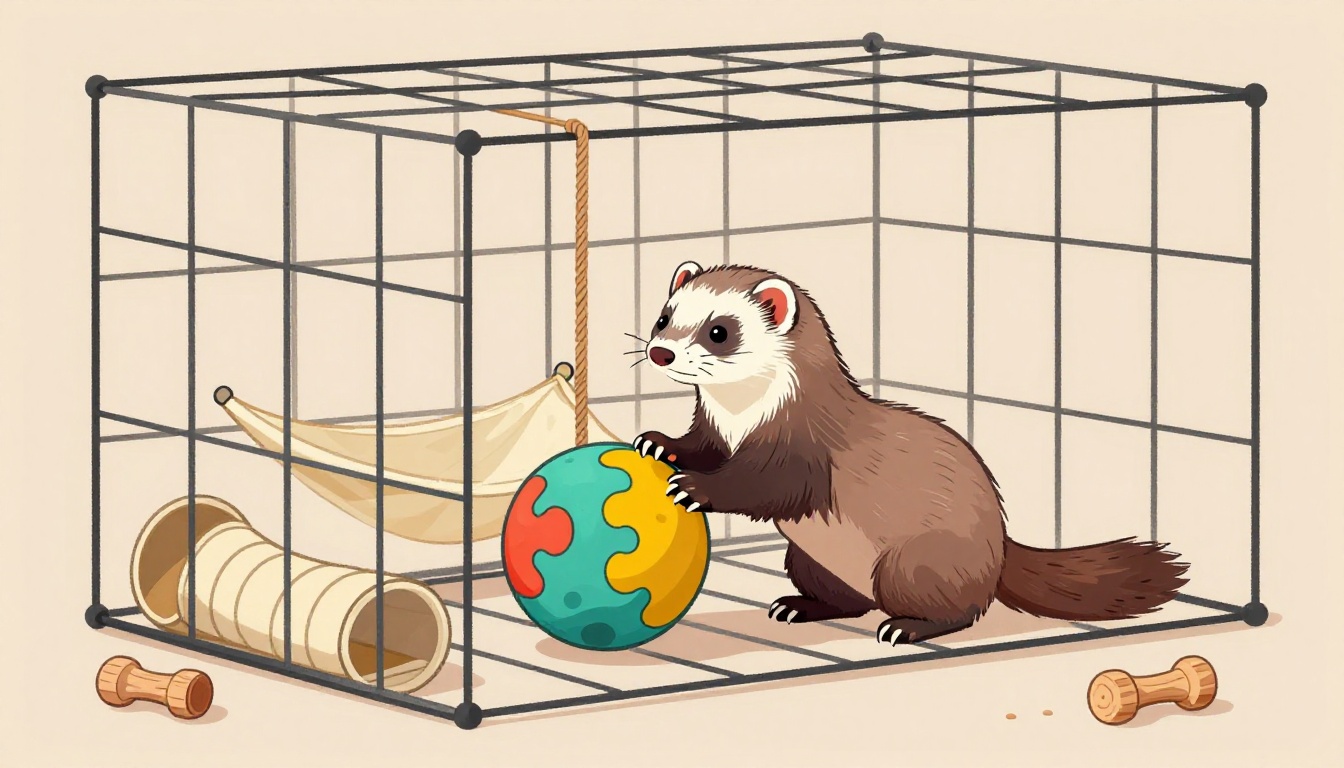
Picture this: your clever ferret flips over its hammock and chews the cage bars. Chaos ensues because boredom hit hard. Ferrets thrive on curiosity. They explore like mini explorers in the wild.
Without mental stimulation for caged ferrets, they sleep too much or act out. This leads to stress, weight gain, or even health issues. You can fix that with simple changes. These boost happiness, cut vet bills, and strengthen your bond. Let’s spot boredom first, then dive into toys, cage tweaks, playtime, and routines that keep your pet sharp.
Spot the Telltale Signs Your Ferret is Bored and Craving Action
Your ferret paces back and forth along the cage floor. Or it nips at the bars nonstop. These clues scream boredom.
Normal ferrets sleep 14 to 18 hours a day. But if yours dozes more and skips play, something’s wrong. Watch for self-biting or excessive digging in one spot. Healthy ones zoom around; bored ones sulk.
Ignore it, and risks pile up. Obesity creeps in from inactivity. Aggression flares during handling. For more on these behaviors, check PetMD’s guide to ferret enrichment. Early spots prevent trips to the vet.
Observe daily for 10 minutes. Note patterns in a quick log. Your ferret might be saying, “Hey, I need action!”
Here’s a simple checklist:
- Pacing or bar-nipping more than usual?
- Sleeping over 18 hours?
- Destructive chewing on non-toys?
- Lethargy during wake times?
Spot two or more? Time to act.
Top Toys That Turn Boredom into Ferret Frenzy
Toys tap into ferrets’ hunting drive. They encourage chasing, digging, and puzzling. This fights boredom while adding exercise. Pick safe ones under $20 at pet stores.
Skip hazards like strings that tangle or tiny parts they swallow. Ferrets destroy fast, so choose durable picks.
Winding Tunnels and Tubes for Non-Stop Exploration
Ferrets adore burrowing. It mimics wild dens. Set up fabric tunnels or cardboard rolls in cage corners.
PVC pipes work too, if smooth-edged. Your pet darts through for hours. Wash weekly and rotate spots. This cuts bar-chewing by half, owners report.

Owners love how tunnels spark zoomies.
Bouncy Balls and Jingly Toys for Chase Games
Plastic balls with bells inside thrill ferrets. They bat, pounce, and chase endlessly. Pick 2- to 3-inch sizes to avoid choking.
Crinkle balls add sound variety. Toss during short sessions. They last months with rough play.
Ferret forums rave about durability.
Soft Stuffables Packed with Treats
Hide kibble in fleece pouches or old socks. Add fish oil scent for appeal. This teaches patience and foraging.
Rotate fillings: meat bits one day, yogurt drops next. Fruits in tiny amounts keep it fresh. Smarts grow as they figure it out.
Upgrade Your Ferret’s Cage into a Play Adventure Zone
Cage tweaks add levels without big space. Ferrets climb naturally. Use multi-tier shelves for action.
Budget hack: dollar-store plastic trays as platforms. Secure everything tight. No wobbles allowed.
Safety rules: check for sharp edges daily.
Add Hammocks, Ladders, and Swing Spots
Hammocks offer rest between romps. Rope ladders build agility. Fleece materials wash easy; skip metal.
Hang for jump access. Watch your ferret swing and flip. Pure joy.
For setup ideas, see the American Ferret Association’s cage tips.
Hidey Holes and Rotating Fresh Features
Boxes or tents make secret lairs. Crinkle paper inside one week, soft blankets the next.
Change weekly to dodge habit. Safe holiday socks add fun seasonally. Keeps noses twitching.
Daily Play Sessions and Games to Deepen Your Bond
Out-of-cage time matters: aim for 2 to 4 hours supervised daily. Ferret-proof a room first.
These games tire minds and build trust. Journal wins to track joy.
Puzzle Feeders That Make Meals a Hunt
Scatter kibble in egg cartons or snuffle mats. DIY cheap.
Mix with drops for scent. Slows gulps, fights bloat. Advance to complex hides.
Sessions last 10 minutes.
Hide-and-Seek and Fetch Challenges
Hide treats in a safe room. Teach fetch with short tubes. Clicker train spins or rolls.
Keep to 15 to 20 minutes. Overdo it, and they nap hard. Bonds grow strong.
Keep the Fun Going with Smart Rotation and Safety Rules
Rotate toys every 3 to 5 days. Freshness reignites interest. Inspect for breaks.
Vets link stimulation to longer lives. Common mistake: same setup forever.
Q&A: “Lost a toy? Replace fast.” “Aggression? Add more play.”
Try one toy swap today.
Stimulated ferrets zoom happier. Start with tunnels or puzzles for quick wins. Your pet thanks you with cuddles.
Share your ferret’s favorite game in comments. Subscribe for more pet tips. Small steps spark big fun.